
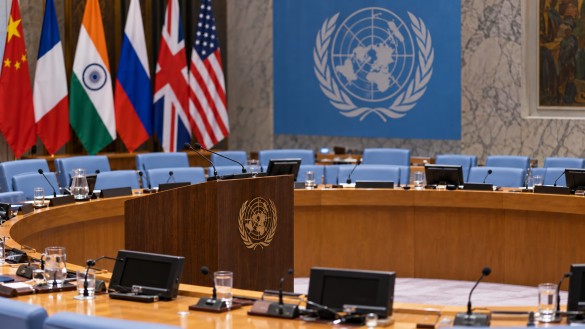
India has reiterated its call for comprehensive reforms of the United Nations Security Council (UNSC), emphasizing the need to address multiple aspects simultaneously, including membership categories, regional representation, the council’s size, working methods, and the use of veto power. India’s Permanent Representative to the UN, Parvathaneni Harish, articulated these demands during a recent address at the United Nations.
Harish underscored that the process of reforming the UNSC should not isolate the issue of veto power from other essential areas. He argued that the veto is a significant responsibility that should be exercised judiciously, especially concerning issues of international peace and security. The existing veto privilege is currently held by the five permanent members of the Security Council: the United States, the United Kingdom, France, Russia, and China.
The Indian representative raised concerns about the disproportionate use of veto power by a few countries, suggesting that this has eroded the council’s credibility and efficiency. Harish noted that the veto had been invoked 331 times in the UN’s history, predominantly by three of the five permanent members. He also referenced a 2022 initiative that mandates the UN General Assembly to hold a discussion each time a veto is exercised, aiming to enhance accountability.
India insists that any reform involving the expansion of permanent membership must ensure equal rights and responsibilities for all permanent members, including the provision of equal veto power. Harish warned that creating a new category of permanent members without equivalent veto rights might further complicate the reform process.
Moreover, India reaffirmed its support for the Common African Position, which advocates for a cohesive African Union stance on Security Council reform. This position reflects India’s broader ambition for a more representative and effective Security Council, capable of addressing present-day global challenges.