
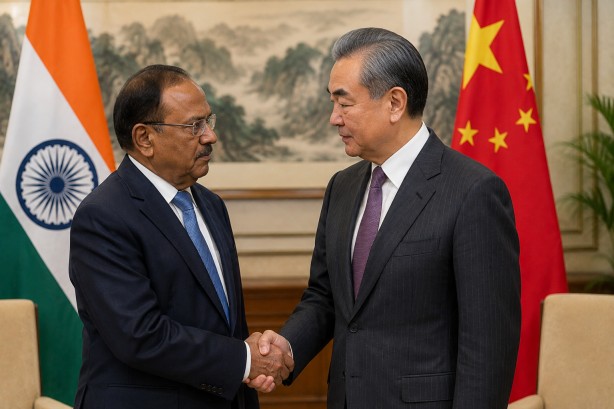
In a recent meeting in Beijing, India’s National Security Adviser Ajit Doval underscored the importance of peace and stability along the India-China border for fostering stronger bilateral relations. This meeting with Chinese Foreign Minister Wang Yi represented the 25th series of discussions between the two nations’ special representatives concerning their enduring boundary dispute. The primary focus of these talks was to advance boundary delimitation, enhance border management, and explore further cooperation across the frontier.
During the discussions, both India and China reviewed the progress in their bilateral relations positively and deliberated on strategies to maintain stability along the Line of Actual Control. They reiterated their dedication to reaching a political resolution to the boundary issue, keeping in view their long-term interests. This dialogue follows the 2024 understanding between Indian Prime Minister Narendra Modi and Chinese President Xi Jinping, aimed at alleviating tensions in the Ladakh region. Subsequent to this understanding, there has been a resumption of activities such as people-to-people exchanges, the Kailash Manasarovar Yatra, and border trade through designated routes.
Doval pointed out that the bilateral ties have been gradually normalizing, attributing this progress directly to the sustained peace along the border. In contrast, China emphasized that the boundary issue should be considered within the broader context of their relationship. Despite these discussions, neither country disclosed significant details regarding the actual demarcation of the disputed boundary. However, both agreed to continue negotiations, with the next round of special representative talks scheduled to take place in India in 2027.
The timing of these discussions is particularly noteworthy as they precede the anticipated visit of Chinese President Xi Jinping to India for the BRICS summit in September. This upcoming event adds a layer of significance to the ongoing efforts to further stabilize the relations between the two countries.