
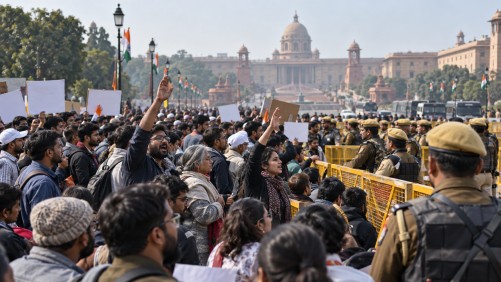
Protests in Delhi have intensified as the Cockroach Janta Party (CJP) and various student groups continue to express dissent against Prime Minister Narendra Modi’s government. The demonstrations, which have lasted for two consecutive days, center around accusations that the government is creating a climate of fear and stifling democratic dissent. The protests are primarily aimed at demanding the resignation of Election Commissioner Gyanesh Kumar, who is accused of overseeing a controversial voter-list revision that reportedly removed approximately 130 million names from India’s electoral rolls.
The voter-list revision has sparked allegations that it could disenfranchise minority communities and unfairly benefit the ruling Bharatiya Janata Party (BJP). However, the BJP has dismissed these claims, asserting that the revision’s purpose is to eliminate ineligible voters from the rolls. Despite the government’s reassurances, the protests have gathered momentum, with thousands of demonstrators taking to the streets of the capital.
During the initial protests, CJP leaders Abhijit Dipke, Saurav Das, and Ashutosh Ranka were detained and later released under conditions aimed at preventing further public disorder. The leaders, however, have vowed to continue their protests and criticized the government’s approach to handling dissent. The authorities have implemented extensive security measures, including police barricades and restrictions on public transport and internet services, to manage the unrest.
The demonstrations have not only focused on the resignation of the Election Commissioner but have also evolved into broader criticism of Prime Minister Modi and Home Minister Amit Shah. CJP leader Saurav Das accused the government of using force to protect its political interests, while student activists like Neha Bora and Surbi Yadav have reported facing abusive treatment and excessive force during detentions.
The BJP has rejected the allegations of electoral manipulation and damage to democratic institutions, with party spokesperson Gaurav Bhatia defending the voter-list revision as necessary to remove deceased and illegal voters. Meanwhile, opposition leader Rahul Gandhi has lent his support to demands for accountability regarding the voter-list revision, increasing pressure on the ruling party amid concerns over electoral transparency.
As the protests continue, they underscore rising political tensions in India over issues of electoral integrity, civil liberties, and the government’s handling of public dissent. Demonstrators have pledged to maintain pressure on the government, while authorities remain intent on preventing further escalation of unrest in the capital.