
India is undergoing a transformative phase in its transportation infrastructure, significantly cutting travel times across various regions. The country’s ambitious expansion of expressways, bridges, tunnels, and modern rail services is enhancing connectivity, according to a government factsheet. These developments aim to streamline journeys between major cities and remote areas, making travel faster and more efficient.
The introduction of new expressways is a pivotal part of this transformation. The Delhi-Mumbai Expressway, for example, is set to reduce the travel time between the two cities to approximately 12 hours, down from the previous 33 hours. Similarly, the Delhi-Meerut Expressway now enables a trip in just 50 minutes, compared to the earlier 2.5 hours. Other expressways like the Bengaluru-Mysuru route and the Delhi-Amritsar-Katra Expressway have also seen substantial reductions in travel times.
Bridges and tunnels are playing a crucial role in improving regional connectivity, particularly in northeastern India. The Bhupen Hazarika Setu and the Bogibeel Bridge have drastically cut travel times in Assam and Arunachal Pradesh. Meanwhile, the Atal Tunnel and other mountain tunnels are making previously arduous routes more accessible, such as the journey between Manali and the Lahaul-Spiti region.
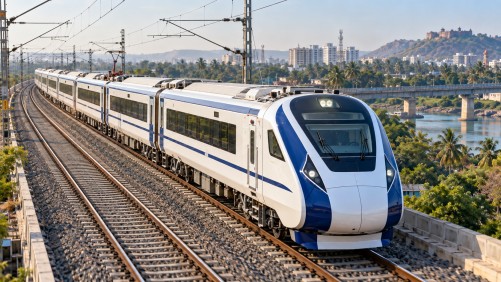
In addition to road infrastructure, India’s rail services are advancing with the introduction of Vande Bharat trains, which are slashing journey durations on major routes. Noteworthy improvements include the New Delhi-Varanasi service, which takes around eight hours, and the Katra-Srinagar service, now completed in about three hours. The railway sector anticipates further enhancements, with speed improvements planned for 549 trains by 2026.
Looking ahead, the Mumbai-Ahmedabad High-Speed Rail Corridor is a significant project that promises to redefine rail travel between the two cities. Scheduled for completion by August 2027, this high-speed line will cover 508 km in less than two hours, significantly outpacing the current road travel time of eight to nine hours. The project will feature 12 stations and an innovative undersea tunnel, further cementing India’s commitment to modernizing its transportation network.