
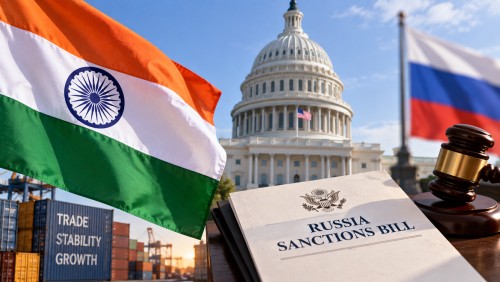
The global energy landscape faces potential disruptions following the U.S. House of Representatives’ approval of a sanctions bill targeting countries with substantial trade ties to Russia. The Lindsey O. Graham Sanctioning Russia and Iran Act of 2026, which passed with a 262-159 vote, proposes tariffs of up to 100% on major importers of Russian oil. This development could significantly impact nations such as India, China, Slovakia, Hungary, and Azerbaijan if they persist in their current trade practices with Russia.
In response to the proposed legislation, India’s Ministry of External Affairs has asserted that the country will take all necessary steps to safeguard its trade and economic interests. The ministry emphasized India’s commitment to ensuring energy security for its population of 1.4 billion, highlighting diversification of energy sources as a key strategy. Discussions with senior U.S. officials have already taken place to address the potential ramifications of the bill.
India has been actively expanding its energy portfolio, increasing purchases from countries like the United States and Venezuela in recent months. Despite these diversification efforts, Russia remains a significant supplier of crude oil to India. The proposed U.S. sanctions, pending presidential approval to become law, have cast uncertainty over the future of India-U.S. trade relations and the broader global energy markets.
The Indian government plans to collaborate with local trade and industry bodies to assess and mitigate any economic consequences that may arise from the sanctions. As the international community watches for the next steps, the legislation’s impact on global trade dynamics and energy security remains a pressing concern.