
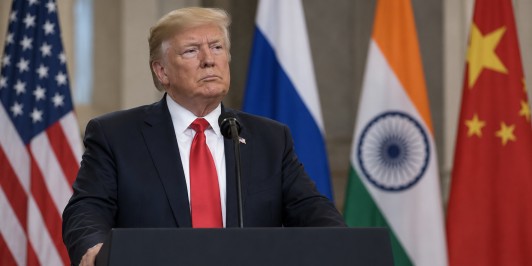
In an ongoing effort to exert pressure on Moscow to halt the conflict in Ukraine, the United States has introduced new legislative measures that could potentially impact key global energy markets. Last week, President Donald Trump signed the Lindsey O. Graham Sanctioning Russia and Iran Act of 2026 into law, a move that provides him with the authority to impose significant tariffs on countries purchasing Russian oil and natural gas. Among the major buyers who might be affected are India and China, which could face tariffs as high as 100% should the US choose to exercise these new powers.
Addressing the United Nations General Assembly, President Trump emphasized the power the new law grants him to influence the situation in Ukraine. He highlighted the potential use of these tariff measures as a means to pressure Russia into negotiations, reiterating calls for an end to the conflict. The legislation not only targets energy trade but also introduces further sanctions on Russian officials, financial institutions, and networks suspected of circumventing existing sanctions.
The broader geopolitical implications of these potential tariffs are significant, as they could alter trade dynamics with some of the world’s largest energy consumers. While the law does not automatically trigger the imposition of tariffs on India or China, it grants the US president the discretion to determine if and how these tariffs might be applied. This strategic ambiguity leaves room for diplomatic maneuvering and potential escalation depending on future developments.
This legislative development aligns with ongoing US efforts to bring Russia to the negotiating table over the Ukraine conflict. Ukrainian President Volodymyr Zelenskyy has expressed support for the new sanctions law, signaling readiness for further dialogue aimed at resolving the war. The US’s approach underscores its commitment to leveraging economic tools in pursuit of a diplomatic resolution to the crisis.
As the situation unfolds, the international community is closely monitoring the possible economic fallout and geopolitical shifts that could result from the implementation of these tariffs. The potential impact on major energy importers like India and China remains a key point of interest, as any US action could have ripple effects across global energy markets and international relations.