
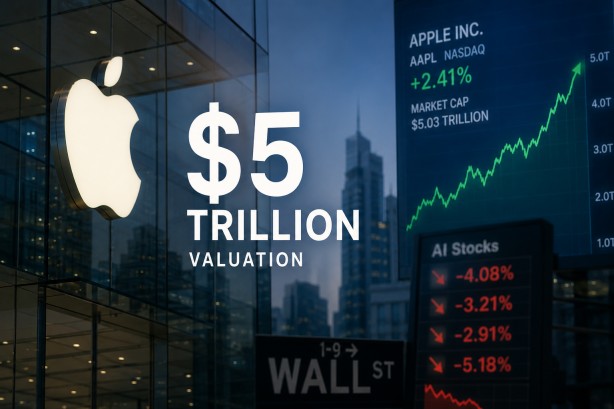
Apple has achieved the distinction of becoming the second company globally to reach a market valuation exceeding $5 trillion. This milestone is attributed to the robust demand for its products and a shift among investors towards firms with minimal expenditures in artificial intelligence (AI). The surge in Apple’s stock price to an all-time high has positioned the company ahead of several technology firms heavily invested in AI, as investors express growing concerns over the significant costs associated with AI infrastructure and data center expansions.
The technology sector at large has been under strain, with declines in semiconductor and AI-related stocks driven by apprehensions over escalating capital expenditures and intensifying competition within the global chip industry. Investor sentiment has been further dampened by worries that major tech companies are making substantial investments in AI without yielding immediate financial benefits. In contrast, Apple has managed to sidestep these issues by maintaining a more conservative strategy regarding AI investment while continuing to capitalize on the steady demand for its hardware offerings.
An additional factor contributing to Apple’s success is the introduction of a new device leasing program in the United States. This initiative enables customers to pay for iPhones, iPads, Apple Watches, and Macs on a monthly basis, which is intended to bolster consumer demand. This strategic move aligns with Apple’s broader efforts to sustain growth and stability amidst the volatility experienced across the AI sector.
Apple’s stock performance this year has notably outshined that of many other major technology companies, attracting investors in search of more consistent growth opportunities. As the market grapples with uncertainty surrounding AI investments, Apple’s cautious approach and solid product sales have helped it to secure a unique position in the competitive technology landscape.