
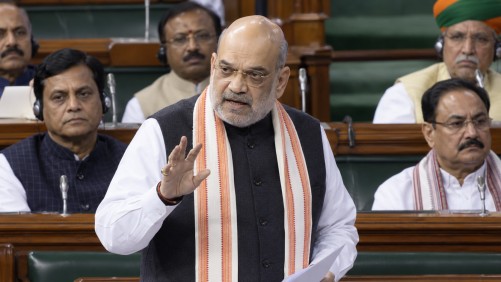
Union Home Minister Amit Shah has extended a challenge to the Opposition in India, expressing the Bharatiya Janata Party’s (BJP) readiness to hold a special parliamentary session to address allegations of vote theft leveled against the ruling party. Shah’s remarks, made during a BJP state working committee meeting in Lucknow, come in response to accusations by Congress leader Rahul Gandhi and Samajwadi Party leader Akhilesh Yadav against the Election Commission.
Shah dismissed these allegations as baseless and criticized the Opposition for opting for street protests instead of engaging in parliamentary debate. He specifically challenged Gandhi and Yadav to present their claims in Parliament, asserting that they prefer public demonstrations over legislative discussions.
The context of Shah’s statements is rooted in the Opposition’s planned protests against Chief Election Commissioner Gyanesh Kumar. These demonstrations include a symbolic public impeachment event and a large gathering at Delhi’s Ramlila Ground, aimed at highlighting perceived threats to democratic institutions. The INDIA bloc, an alliance of Opposition parties, had initially intended to hold the symbolic event at Congress president Mallikarjun Kharge’s residence but postponed it due to unexpected rainfall.
The controversy surrounds the Election Commission’s Special Intensive Revision of electoral rolls, which the Opposition claims could disenfranchise voters and unfairly benefit the BJP. In response, Shah criticized Congress and Samajwadi Party leaders for blaming the Election Commission after their electoral losses, defending the BJP’s political record and dismissing the vote theft allegations as a reaction to their defeat.
Shah’s comments underscore the ongoing tension between the BJP and Opposition parties, as both sides prepare for upcoming electoral challenges. The BJP’s stance highlights its confidence in countering the allegations through formal parliamentary avenues, while the Opposition remains focused on public protests to draw attention to their concerns over electoral processes.