
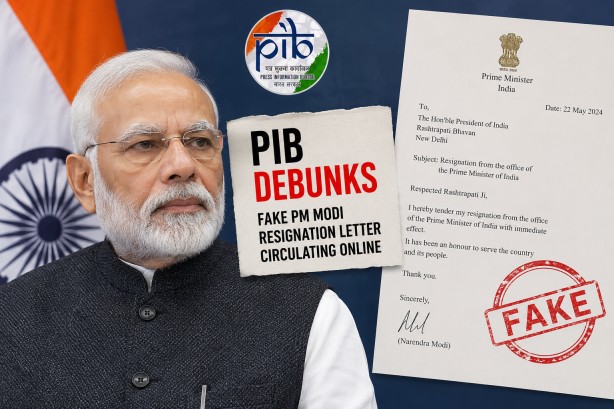
Rumors that Prime Minister Narendra Modi had stepped down from his position have been debunked by the Indian government. A social media post, which went viral, falsely claimed that Modi had resigned, complete with a fabricated letter featuring the national emblem and an imitation of his signature. The government’s Fact Check unit has confirmed that this letter is not genuine.
The government has explicitly clarified that no resignation letter has been issued or signed by the prime minister. People are urged to check with official sources for confirmation before believing or spreading such information online. This incident highlights the challenges posed by misinformation, which has seen a rise in frequency and sophistication with rapidly advancing technology.
This recent fake letter is not an isolated incident. There have been other instances of misinformation, including videos generated by artificial intelligence that falsely depict the prime minister making comments about student protests. These fabricated contents are designed to mislead the public and create confusion.
Authorities advise everyone to be cautious and critically evaluate the content they encounter on social media. The spreading of false information can have significant impacts, making it crucial for the public to rely on trustworthy sources when seeking the truth about national and international affairs.