
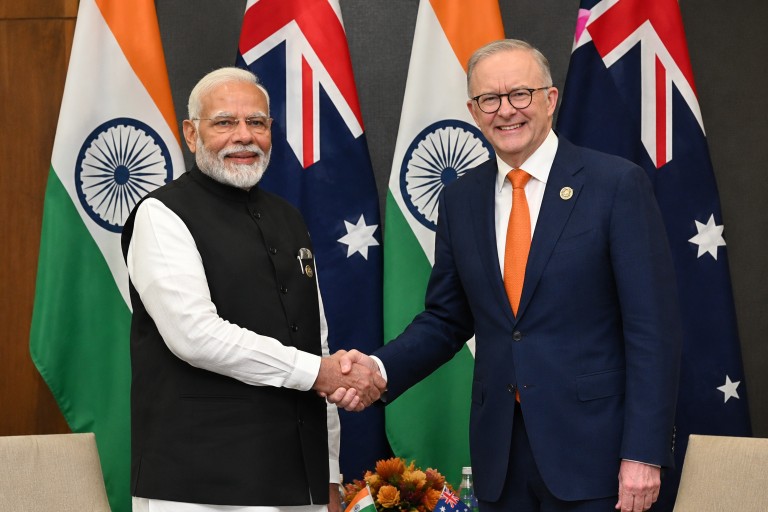
In an effort to bolster their bilateral relations and support the advancement of India’s nuclear energy sector, India and Australia have reached a significant agreement to supply uranium. This landmark accord is set to enable consistent uranium exports from Australia to India, addressing previous delays despite an earlier trade agreement established in 2014. The new deal is intended to aid India’s pursuit of clean energy, with strict provisions ensuring the uranium is utilized solely for civilian nuclear power generation.
Indian Prime Minister Narendra Modi highlighted the agreement’s role in enhancing India’s nuclear energy capacity, describing it as a pivotal move towards achieving the country’s ambitious energy goals. Modi also emphasized the significance of India-Australia collaboration in maintaining peace, stability, freedom of navigation, and a rules-based order throughout the Indo-Pacific region. His Australian counterpart, Prime Minister Anthony Albanese, echoed these sentiments, stating that the deal would not only open up new prospects for Australia’s resource sector but also deepen the economic and strategic partnership between the two nations.
Albanese pointed out that the relationship between India and Australia has flourished in recent years, driven by increased political engagement and cooperative ventures. In addition to the uranium agreement, both leaders reaffirmed their dedication to enhancing defence and security cooperation. They agreed to intensify consultations on developments impacting their mutual interests in the Indo-Pacific, further solidifying the strategic alignment between the two countries.
Beyond governmental and economic ties, the visit also underscores the strong connections between the peoples of India and Australia. During his stay, Prime Minister Modi is slated to address a large gathering of the Indian-Australian community, underscoring the vibrant cultural and social links that bind the two nations.