
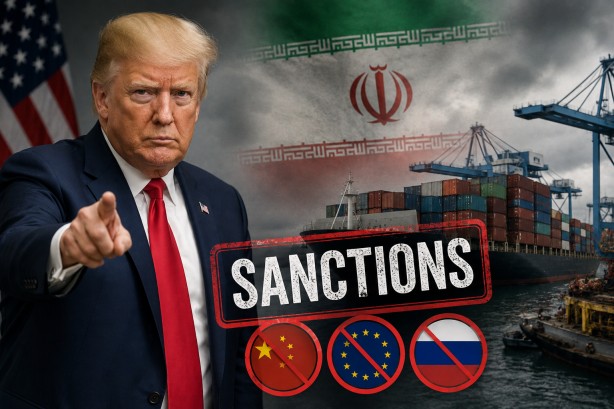
The United States has issued a stern warning to countries and corporations that persist in economic partnerships with Iran, as it ramps up efforts to sever Tehran’s access to international revenue streams. US Treasury Secretary Scott Bessent announced that the focus of this campaign would be on entities partaking in activities that boost Iran’s financial resources, particularly those aiding in the sale of Iranian oil or engaging in financial transactions. Nations and companies continuing their business with Tehran might face deadlines to cease operations or risk facing US sanctions.
This aggressive stance has sparked worries about a possible clash with China, which stands as Iran’s largest trading partner and a significant purchaser of its oil. Beijing has resisted US pressure, advocating instead for political dialogue and diplomatic solutions rather than economic sanctions.
In response, Iran has hinted at retaliatory measures against countries participating in the US initiative, with officials suggesting that possible counteractions could include military or cyber operations. This development comes in the context of an ongoing standoff over Iran’s nuclear ambitions and the strategic Strait of Hormuz, a pivotal corridor for global energy distribution. The US has leveraged economic sanctions to curb Iranian oil exports, while Iran continues to exert influence over shipping in this critical passage.
The United States contends that its economic pressure is aimed at compelling Iran to alter its course, following the ineffectiveness of military strategies in achieving broader goals. Nonetheless, US officials have not ruled out the possibility of further military actions.
The threat of sanctions has already impacted Iran’s trade relations, with the United Arab Emirates announcing a halt in trade activities. Meanwhile, Turkey, another key trading ally of Iran, has yet to declare its stance on the new US measures.