
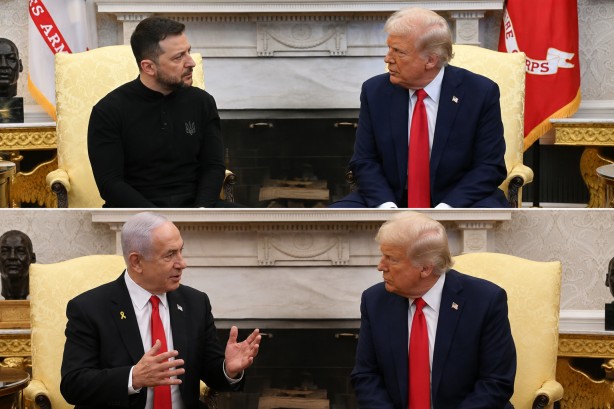
In a series of high-profile meetings at the White House, U.S. President Donald Trump engaged separately with Ukrainian President Volodymyr Zelenskyy and Israeli Prime Minister Benjamin Netanyahu. Trump characterized both discussions as constructive, although he refrained from providing detailed insights into the conversations. Following his meeting, Zelenskyy highlighted a focus on enhancing Ukraine’s air defense systems, notably mentioning talks about potential domestic production of Patriot missile interceptors through licensing arrangements. Additionally, the dialogue between the two leaders touched upon revitalizing diplomatic negotiations.
Netanyahu’s visit to the Oval Office marked his first direct meeting with Trump since the United States and Israel undertook a joint military campaign against Iran earlier in the year. The discussions reportedly spanned a range of critical issues, including regional security dynamics, the situation in Iran and Lebanon, and strategies to further the Abraham Accords. These accords have been pivotal in reshaping diplomatic ties in the Middle East.
The backdrop to these meetings is a period of significant adjustment in Washington’s foreign policy, particularly concerning ongoing conflicts in Ukraine and the Middle East. Both Kyiv and Israel are keen on securing sustained U.S. support amid these shifts. The evolving U.S. stance remains crucial as it impacts the strategic calculations of both nations.
While the specifics of the talks remain undisclosed, the meetings underscore the strategic importance the U.S. places on its alliances with Ukraine and Israel. With Zelenskyy, the emphasis appears to be on bolstering defense capabilities, a critical need given the ongoing tensions in Eastern Europe. Meanwhile, Netanyahu’s discussions likely reflect Israel’s security concerns in a volatile region, with Iran featuring prominently in their security calculus.
As the U.S. navigates complex international landscapes, these dialogues with key global partners signal a continued commitment to addressing regional security challenges and fostering diplomatic relations. Both Ukraine and Israel remain pivotal in the broader geopolitical strategies of the United States, underscoring the necessity of these high-level engagements.