
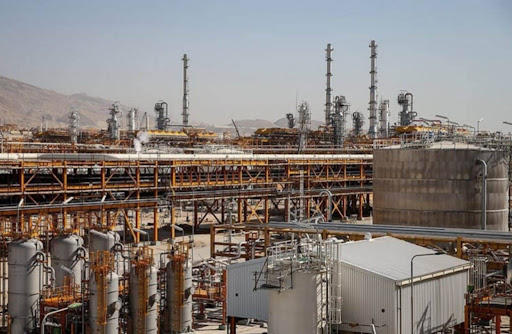
The world arrived at one of its most dangerous energy moments in decades on Wednesday when Iran threatened to strike Gulf energy infrastructure following an Israeli attack on the South Pars gasfield. The Revolutionary Guards named specific facilities in Saudi Arabia, the UAE, and Qatar as targets and ordered immediate evacuation. Oil prices surged toward $110 a barrel as the world confronted a crisis that was the product of months of escalation finally reaching its most acute point.
South Pars, the world’s largest natural gas reserve shared between Iran and Qatar, had been kept off the battlefield through weeks of careful restraint. The Israeli decision to strike it — reportedly with US authorization — was the product of a calculated strategic shift that ended that restraint. Both countries had previously avoided targeting Iranian energy infrastructure, but the calculus had changed — and the world had arrived at a moment of maximum energy danger as a result.
Iran’s state broadcaster named Saudi Arabia’s Samref refinery and Jubail complex, the UAE’s al-Hosn gasfield, and Qatar’s Mesaieed and Ras Laffan facilities as imminent targets. Workers and residents were ordered to evacuate without delay. Governor Eskandar Pasalar of Asaluyeh condemned the US-Israeli attack as “political suicide” and declared the conflict had entered a full-scale economic war — the culmination of a process of escalation that had been building for weeks.
Brent crude climbed to $108.60 per barrel, while European gas benchmarks surged more than 7.5%. Gulf oil exports had already fallen 60% from pre-war levels, battered by infrastructure attacks and Iran’s Strait of Hormuz blockade. The conflict’s third week had opened with Iranian attacks on multiple UAE and Iraqi energy assets — foreshadowing the even more sweeping threat that materialized Wednesday. Iran had maintained its own crude exports through the strait while blocking Gulf neighbors from doing so throughout.
Qatar’s government spokesperson warned that targeting energy infrastructure endangered global energy security and millions of regional residents. Understanding how the world got to this dangerous moment required tracing a path of escalation that had moved step by inevitable step toward the energy war now underway. The coming hours would reveal what the next step would be — and how much further the escalation would go.